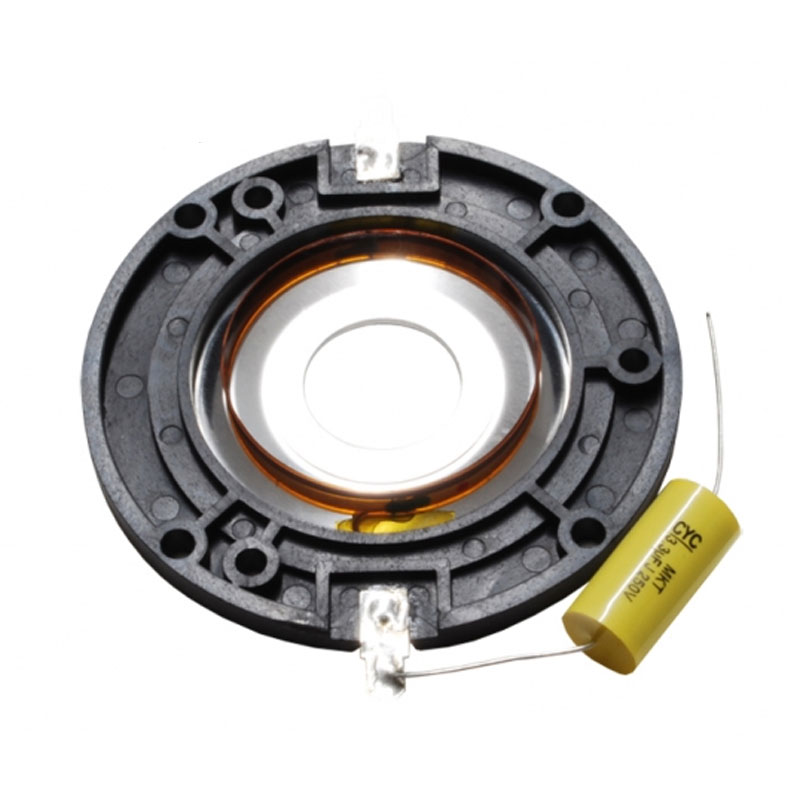
- • Why Does My Replacement CTW500RK Still Produce No Sound?
If the tweeter remains silent after installing a new voice coil, check the speaker terminals, crossover/capacitor, amplifier output, and coil connections before assuming the replacement is defective. A replacement coil cannot correct a separate problem in the tweeter's diaphragm or crossover.
- • Why Is the CTW500RK Scraping After Installation?
Voice-coil rubbing can occur when the coil is not perfectly centered inside the magnetic gap. User discussions about reconing consistently emphasize careful alignment because even a small positioning error can create rubbing or distortion.
- • Can Incorrect Installation Damage a New CTW500RK?
Yes. Excessive force, poor alignment, or damaging the coil leads during installation can compromise the replacement. Users performing voice-coil repairs have reported that alignment and handling are critical during recone work.
- • Why Does the Tweeter Sound Distorted After Replacing the Voice Coil?
Distortion immediately after replacement can indicate coil misalignment, damage during installation, or another damaged component in the tweeter. A properly centered voice coil should move freely without audible scraping.
- • Why Did My Original CTW500 Voice Coil Burn Out?
Excessive power, clipping, or aggressive system tuning can generate enough heat to damage a voice coil. Orion rates the CTW500 at 130W RMS, so replacing the coil without correcting the cause of the original failure can result in another burned coil.
- • Can Too Much EQ Cause Another CTW500RK Failure?
Yes. Heavy EQ boosting can increase the energy sent to a driver beyond what the system can safely handle. User reports and audio-forum discussions specifically identify excessive power and aggressive EQ as potential causes of voice-coil damage.
- • Why Does the New CTW500RK Have a Different Sound Than the Old Coil?
If the replacement is correctly installed but sounds different, check the tweeter's diaphragm, crossover components, amplifier settings, and installation alignment. The CTW500 is designed for approximately 2 kHz–20 kHz, so crossover settings can significantly affect its tonal balance.
- • What Causes a Buzzing or Rattling Noise After a Voice-Coil Replacement?
A buzzing or rattling sound can indicate coil rubbing, a loose connection, damaged suspension components, or another mechanical issue. Users troubleshooting damaged voice coils commonly describe scraping or rattling as a symptom of coil or alignment problems.
- • Does Replacing the CTW500RK Fix a Completely Burned Tweeter?
It can restore the driver when the voice coil is the failed component, but it will not repair damage to the diaphragm, magnetic assembly, terminals, or other parts. Voice-coil replacement is specifically intended as a repair component for the CTW500.
- • Why Does the New Voice Coil Fail Again After a Few Days?
Repeated failure usually means the underlying operating conditions have not changed. Check amplifier power, clipping, crossover protection, wiring, and excessive EQ before installing another CTW500RK; otherwise, the replacement may be exposed to the same conditions that damaged the original coil. User reports of Orion drivers and other speakers show that overdriving can quickly result in burned voice coils.